


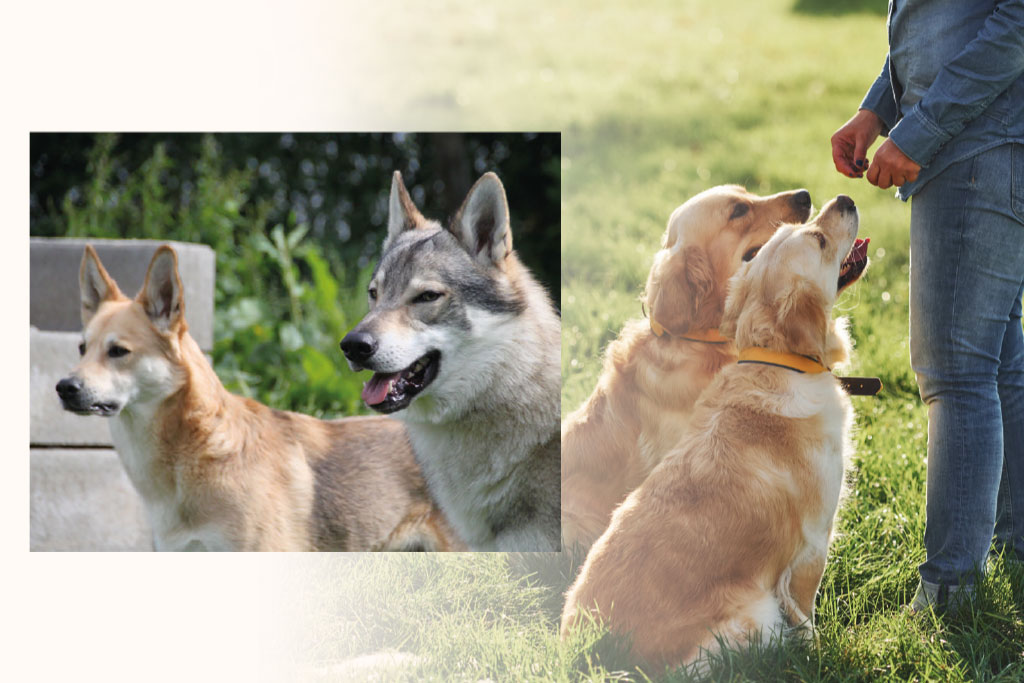
It should be clear that managing two dogs is a real challenge. You should be confident that you can control both dogs effectively, even in an emergency. Furthermore, you must be prepared for your first dog's behavior to change significantly when another dog joins the pack. Sudden aggression towards other dogs is not uncommon, as dogs have a certain protective instinct. It's also possible that the two dogs will egg each other on. In this case, you must be absolutely consistent. You must clearly demonstrate that you are in charge, in charge of the pack, and responsible for their protection. This is neither the responsibility of one dog nor the other. It is highly advisable to have an experienced dog trainer on hand to support you during the initial introduction of the two dogs and in your daily life afterward. Even though a second dog presents a challenge and certainly has its drawbacks, almost every owner of two dogs will confirm that the happiness, joy, and love more than double with two dogs.
Important facts for introducing two dogs
- The age difference between the two dogs should not be too great, because the needs in terms of exercise and running around differ drastically between senior and young dogs.
- The first meeting should take place on neutral ground, at least 1 km away from your home and not on your usual walking route. Another person is essential so the dogs can sniff each other and walk a few meters together undisturbed.
- Establish clear rules: What the first dog isn't allowed to do should also be forbidden for the second dog. You should absolutely
avoid giving the new addition special treatment. Sometimes it's helpful to have separate toys and sleeping areas. Especially in the beginning, however, you shouldn't
leave toys lying around and should only allow the dogs to play with them under supervision.
- Feed both dogs separately. Start by keeping them physically separated. Gradually, you can reduce the distance once you're sure one dog won't steal food from the other.