
He lives a secluded life at altitudes between 2,700 and 5,000
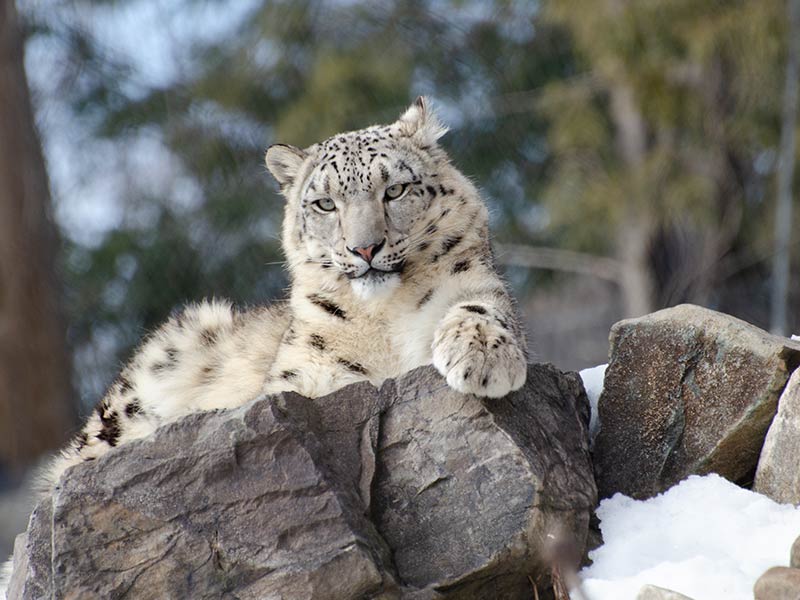
meters, is a solitary animal, and a master of camouflage: The snow leopard, also known as the irbis, is rightly called the "spirit of the mountain" by locals. In some regions, these big cats are even considered sacred and are said to protect ancient deities. But that's not all that makes him so special: his physique also sets him apart from other big cats. Besides Amur tigers and Amur leopards, snow leopards are the only big cats that can cope with extreme temperatures as low as minus 40 degrees Celsius. This is thanks to...
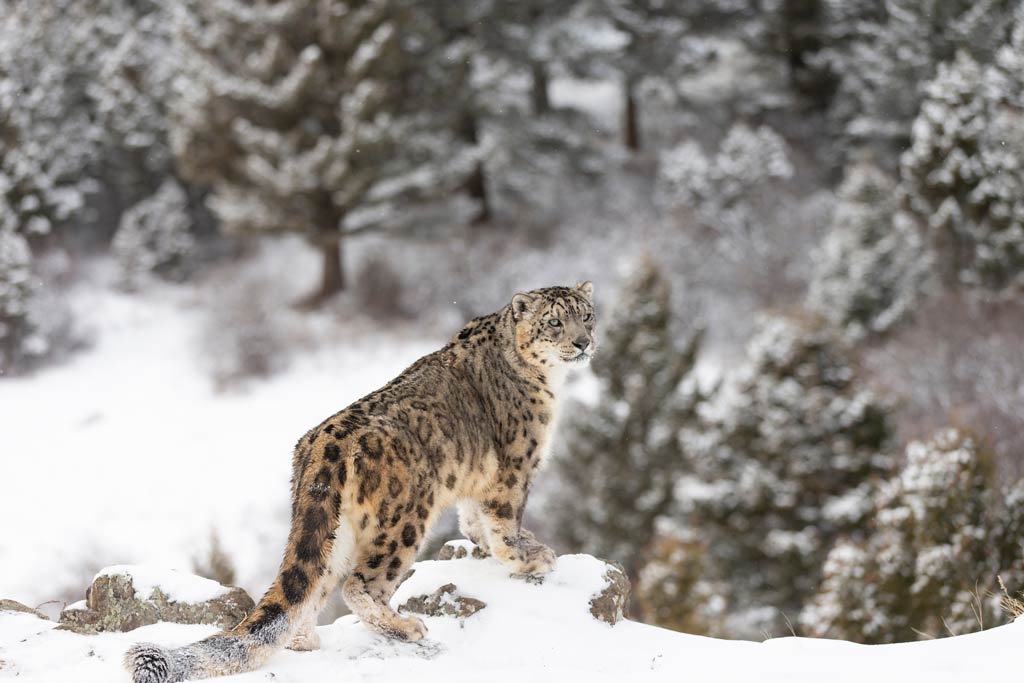
They achieve this, among other things, through their enlarged nasal cavities, which warm the cold mountain air before it reaches their lungs. Their large, hairy paws function like snowshoes in the snowy region, providing additional protection for their soles against the cold. Their nearly one-meter-long, bushy tail helps them maintain balance during great leaps. It also serves as a warming scarf that snow leopards can wrap around their bodies. The gray-beige mottled fur offers optimal camouflage both among rocks and in the snow. The coat pattern is unique to each individual animal.
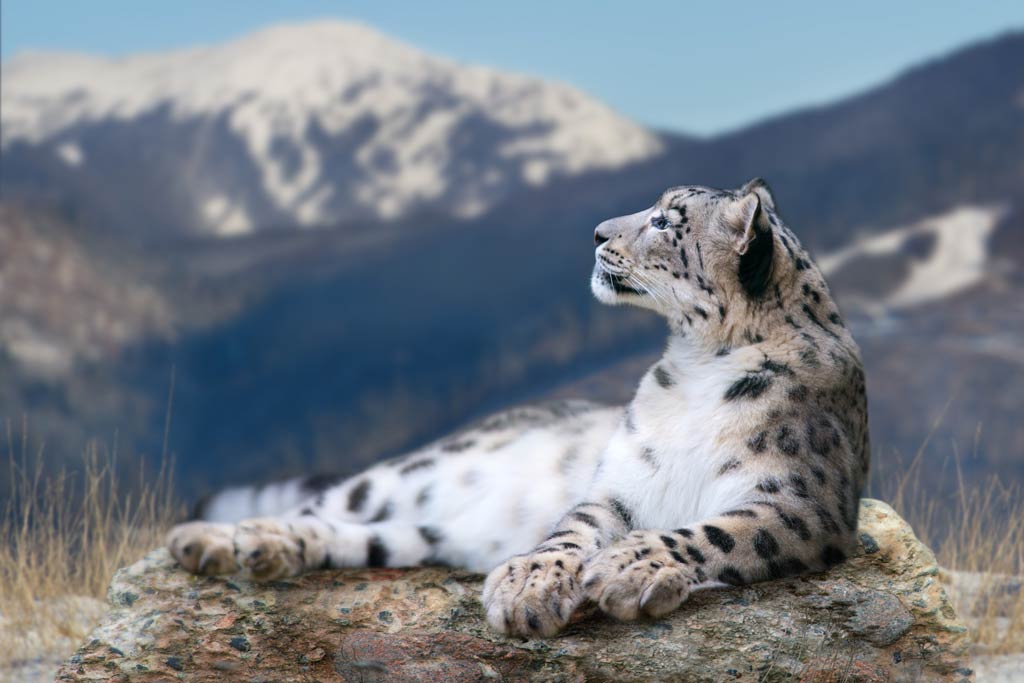
Fun fact: Contrary to what their name suggests, snow leopards do not belong to the leopard family! Furthermore, genetic studies in the 2000s showed that these big cats belong to the panther cat family. Until then, snow leopards formed their own genus within the big cats.
Purring like a house cat
differ from other big cats not only in their physical build
, but also in their roar. Unlike tigers, lions, and the like, these mountain spirits cannot roar because their larynx is shaped differently. Their call is a long, drawn-out howl, which was once often mistaken for the cry of the legendary Yeti. Furthermore, they can
purr just like our domestic cats and share other similarities with them.
Domestic cats: Snow leopards are solitary animals, prefer elevated vantage points, and enjoy playing. Unlike our feline companions, however, these big cats still have to hunt their own food. Their diet consists mainly of ungulates such as ibex or blue sheep, but marmots and larger birds are also among their prey. Their prey can be up to six times heavier than the snow leopard itself.
Hunted and threatened
Snow leopards are among the most endangered big cats on Earth and are listed as "vulnerable" on the IUCN Red List. An estimated 4,200 to 6,400 animals still live in the wild (as of 2017), although population size studies are difficult due to their reclusive nature. Hunting snow leopards has been banned in most countries within their range since the 1970s, but their pelts and bones still fetch high prices on the black market. Their bones, in particular, are considered very valuable and are used in Traditional Chinese Medicine to alleviate ailments such as rheumatism and bone fractures. They are believed to have warming and anti-inflammatory properties, which are used to support the medicinal efficacy of wildlife products such as..
The use of bones or horns, however, is highly controversial. In Traditional Chinese Medicine, the medicinal
effect often plays a secondary role. More important is the belief that the animal's qualities can be transferred to the consumer. In addition to poaching, snow leopards are increasingly threatened by conflicts with local people. Goats, yaks, and other domestic and farm animals are also on the big cats' menu. Ever-expanding human settlements severely restrict the snow leopards' hunting grounds, forcing them to increasingly prey on livestock in order to survive. Large animal welfare and environmental organizations such as WWF and NABU are committed to the conservation of snow leopards and educate the local population about these big cats. Thanks to so-called "anti-poaching units," the hunting of these "spirits of the mountains" has been significantly reduced in recent years.